How Technology Enables Smarter Marketing Strategies
June 30, 2026
By Durga Thakkar
5 MIN
Table of Contents
In today’s digital-first economy, marketing success is no longer driven solely by creativity and intuition. Modern brands operate in an environment where consumer behaviour changes rapidly, customer journeys span multiple platforms, and competition intensifies daily. As a result, businesses increasingly rely on technology to gather insights, automate processes, personalise experiences, and improve decision-making.
Technology has transformed marketing from a largely reactive function into a proactive, data-driven discipline. Advanced analytics, artificial intelligence (AI), automation tools, customer data platforms, and predictive modelling enable marketers to understand audiences with unprecedented precision. Organisations that integrate technology into their marketing frameworks can optimise campaigns, improve customer experiences, and generate stronger returns on investment.
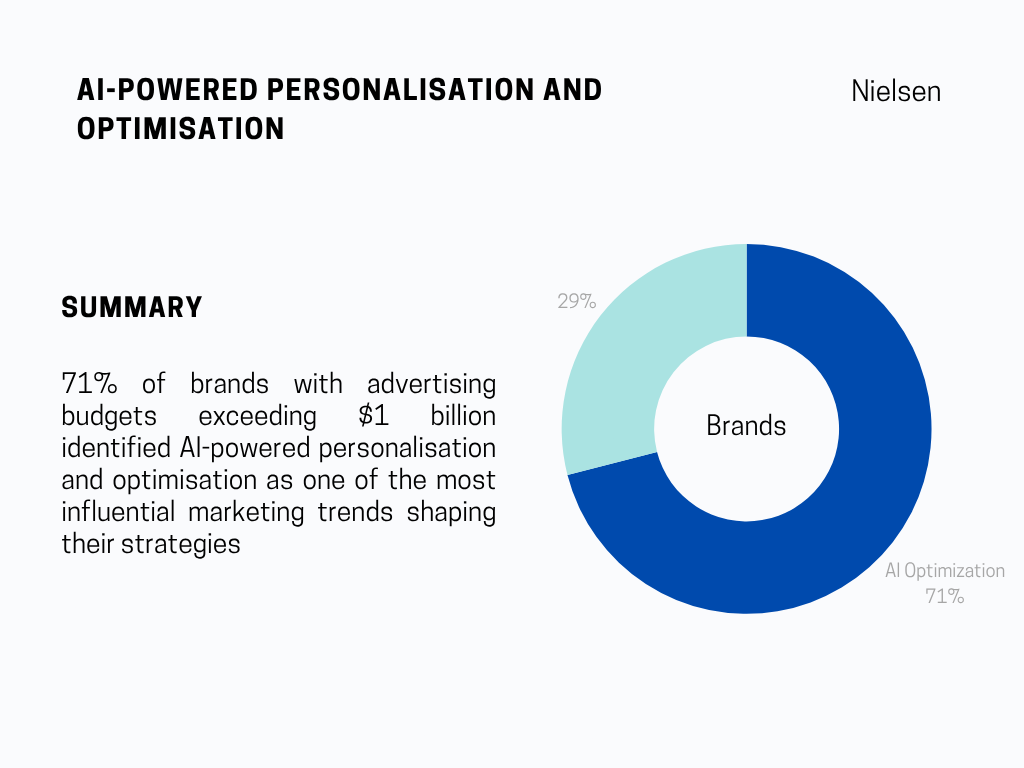
According to the Nielsen 2025 Annual Marketing Report, 71% of brands with advertising budgets exceeding $1 billion identified AI-powered personalisation and optimisation as one of the most influential marketing trends shaping their strategies.
Additionally, 65% of marketers reported that retail media networks are becoming increasingly important within their media plans. These findings highlight the growing role of technology in helping businesses create smarter and more effective marketing strategies.
Businesses seeking sustainable growth are increasingly investing in Tech & Strategy Services to align technological capabilities with marketing objectives. By combining innovation, analytics, and strategic planning, organisations can build marketing systems that are more intelligent, scalable, and results-driven.
Leveraging Data Analytics for Better Decision-Making
Modern marketing depends on accurate, actionable insights. Data analytics allows organisations to move beyond assumptions and understand what customers actually want, how they behave, and which channels drive results. Through advanced analytics platforms, businesses can transform raw data into strategic decisions that improve marketing performance.
Customer Behaviour Analysis: Analytics tools collect and evaluate browsing patterns, purchase histories, engagement metrics, and demographic information to identify customer preferences and trends.
Real-Time Campaign Monitoring: Marketers can track campaign performance instantly, allowing them to adjust messaging, budgets, and targeting before significant resources are wasted.
Audience Segmentation: Data analytics helps divide customers into meaningful groups based on behaviour, interests, purchase intent, and demographics, enabling more precise marketing efforts.
Attribution Modelling: Advanced measurement systems identify which channels contribute most effectively to conversions, improving budget allocation decisions.
Predictive Insights: Machine learning models analyse historical patterns to forecast future customer actions, helping marketers anticipate demand and optimise campaigns.
Performance Benchmarking: Businesses can compare campaign outcomes against historical performance and industry standards to identify opportunities for improvement.
Strategic Resource Allocation: Organisations using Tech & Strategy Services can leverage analytics to determine where investments will generate the highest returns and long-term value.
Data-driven marketing has become a competitive necessity because it enables brands to make informed decisions rather than relying on intuition alone. As marketing ecosystems grow more complex, analytics provides the clarity needed to achieve measurable business outcomes.
Personalisation and Customer Experience Through Technology
Consumers increasingly expect brands to deliver personalised experiences across every interaction. Technology enables businesses to meet these expectations by analysing customer data and delivering highly relevant communications at scale.
The rise of personalisation reflects a fundamental shift in consumer behaviour. Customers are more likely to engage with brands that understand their preferences, anticipate their needs, and provide seamless experiences throughout the customer journey.
Research discussed by TechRadar Pro indicates that consumers continue to value authentic human interactions even as AI-driven customer experiences become more common.
Dynamic Content Delivery: Websites, emails, and advertisements can automatically adapt based on customer behaviour, interests, and previous interactions.
Omnichannel Experiences: Technology integrates customer interactions across websites, social media, email, mobile applications, and physical locations to create a consistent brand experience.
Customer Journey Mapping: Businesses can visualise and optimise every touchpoint in the customer lifecycle to improve engagement and satisfaction.
Real-Time Recommendations: AI-powered recommendation engines suggest products, services, or content based on user preferences and browsing behaviour.
Behavioural Trigger Marketing: Automated systems deliver messages based on specific customer actions such as abandoned carts, product views, or repeat purchases.
Human-Centred Technology Integration: While AI supports personalisation, successful brands balance automation with authenticity. Research indicates that consumers continue to value genuine human interactions alongside technological convenience.
Companies investing in Tech & Strategy Servicescan create customer-centric marketing strategies that combine technological efficiency with meaningful human connections, ultimately driving stronger engagement and brand loyalty.
AI and Automation Are Transforming Marketing Operations
Artificial intelligence and automation have emerged as two of the most impactful technological developments in modern marketing. These technologies streamline workflows, improve efficiency, and enable marketers to focus on higher-value strategic activities.
According to Nielsen's research on AI in marketing, 59% of global marketers identified AI-powered campaign personalisation and optimisation as one of the most impactful trends influencing the industry.
Meanwhile, the Canva 2025 State of Marketing & AI Report found that 94% of marketers invested in AI during 2024, with 75% planning to increase spending in 2025. Canva's research further revealed that 85% of marketing professionals report AI saves teams more than four hours per week.
Marketing Automation Workflows: Automated systems manage email sequences, lead nurturing, customer onboarding, and follow-up communications without requiring manual intervention. This allows marketing teams to maintain consistent engagement with prospects and customers while reducing repetitive administrative tasks.
AI-Powered Personalisation: Machine learning algorithms analyse user behaviour to deliver highly relevant content, offers, and recommendations tailored to individual customers. As a result, brands can create more meaningful interactions that improve engagement, conversions, and customer satisfaction.
Content Creation Support: AI tools assist marketers with content ideation, drafting, optimisation, and creative production while improving operational efficiency. These tools help teams produce content faster, maintain consistency across channels, and focus more time on strategy and creativity.
Predictive Lead Scoring: AI evaluates customer interactions and behavioural signals to identify prospects most likely to convert into paying customers. By prioritising high-intent leads, sales and marketing teams can allocate resources more effectively and improve conversion rates.
Automated Customer Support: Intelligent chatbots and virtual assistants provide immediate responses to customer inquiries while reducing operational workloads. They can handle common questions around the clock, improving customer experiences and freeing support teams to address more complex issues.
Campaign Optimisation: AI continuously analyses campaign performance and automatically adjusts bidding strategies, targeting parameters, and budget allocations. This real-time optimisation helps maximise marketing ROI while ensuring campaigns remain aligned with performance goals.
Enhanced Productivity:Canva's research revealed that 85% of marketing professionals report AI saves teams more than four hours weekly, creating additional capacity for strategic initiatives. The time saved can be redirected toward innovation, planning, customer research, and other high-impact activities that drive business growth.
Organisations implementing Tech & Strategy Servicesoften use AI and automation to create scalable marketing ecosystems that deliver better customer experiences while improving operational efficiency.
Future-Proofing Marketing with Emerging Technologies
The marketing landscape continues to evolve rapidly as privacy regulations, changing consumer expectations, and emerging technologies reshape how brands connect with audiences. Businesses that proactively adapt to these changes are better positioned for long-term success.
One of the most significant shifts involves the gradual decline of third-party cookies and increased emphasis on privacy-focused marketing strategies. Organisations must develop new approaches to data collection, measurement, and customer engagement.
First-Party Data Strategies: Brands increasingly rely on data collected directly from customers through websites, mobile applications, loyalty programs, subscriptions, surveys, and CRM systems. By building robust first-party data ecosystems, organisations can maintain accurate audience insights, improve personalisation efforts, and reduce dependence on external data sources while strengthening customer trust.
Privacy-Centric Marketing: Companies are investing in transparent data collection and consent management practices that prioritise consumer privacy. Clear communication about how customer information is collected, stored, and used helps businesses comply with evolving regulations while fostering stronger relationships with increasingly privacy-conscious consumers.
Customer Data Platforms (CDPs): Unified data systems help organisations consolidate customer information from multiple channels into a single source of truth. This enables marketers to create comprehensive audience profiles, improve segmentation accuracy, deliver consistent experiences across touchpoints, and support more effective decision-making.
Advanced Predictive Analytics: Emerging technologies enable more accurate forecasting of customer behaviour, market trends, purchasing patterns, and campaign performance. These insights allow businesses to anticipate customer needs, identify growth opportunities, optimise resource allocation, and make proactive strategic decisions rather than reacting to market changes after they occur.
Retail Media Network Growth:Nielsen’s 2025 report found that 65% of marketers expect retail media networks to play an increasingly important role in their marketing strategies. As retailers continue to expand their advertising ecosystems, brands gain access to valuable shopper data, highly targeted advertising opportunities, and measurable performance insights that can improve campaign effectiveness.
AI Agent Integration:Gartner research revealed that 81% of marketing technology leaders are already piloting or implementing AI agent initiatives. These intelligent systems can automate complex workflows, assist with campaign management, generate insights from large datasets, support customer interactions, and help marketing teams operate more efficiently while scaling personalisation efforts .
Emerging Immersive Technologies: Innovations such as augmented reality (AR), virtual reality (VR), and interactive digital experiences are creating new opportunities for customer engagement. Brands can use these technologies to showcase products, enhance online shopping experiences, and create memorable interactions that differentiate them from competitors.
Voice and Conversational Technologies: The growing adoption of voice assistants, conversational AI, and natural language interfaces is changing how consumers search for information and interact with brands. Businesses that optimise content and customer experiences for conversational interactions can improve accessibility, engagement, and discoverability.
Continuous Innovation Frameworks: Businesses utilising Tech & Strategy Services can establish structured processes for evaluating, testing, and implementing emerging technologies. By continuously monitoring industry developments and adapting to new opportunities, organisations can remain agile, maintain competitive advantages, and support sustainable long-term growth.
Future-ready marketing organisations understand that technology is not simply a collection of tools; it is a strategic enabler that supports agility, innovation, and long-term business success. Turn insights into action with strategic Tech & Strategy Services that maximise efficiency, engagement, and ROI.
Conclusion
Technology has fundamentally transformed how businesses approach marketing. Through data analytics, artificial intelligence, automation, personalisation, and emerging digital platforms, organisations can make smarter decisions, optimise campaigns, and create more meaningful customer experiences. The shift toward technology-driven marketing is no longer optional; it is a critical requirement for maintaining competitiveness in an increasingly digital marketplace.
As consumer expectations continue to evolve and marketing ecosystems become more complex, businesses must embrace innovative solutions that enhance efficiency and improve outcomes. Investing in Tech & Strategy Services enables organisations to align technological capabilities with business objectives, ensuring marketing strategies remain agile, intelligent, and future-ready.
Brands that successfully combine technology, strategy, and customer understanding will be best positioned to achieve sustainable growth, stronger customer relationships, and measurable marketing success in the years ahead.
Work with Scratchpad to create future-ready marketing strategies that keep your business ahead of changing trends.
FAQs
1. What are the latest technology trends in marketing? Key trends include AI-powered marketing, predictive analytics, first-party data strategies, retail media networks, and marketing automation.
2. What are the 7 steps of marketing strategy? The seven steps are market research, audience identification, goal setting, competitor analysis, channel selection, campaign execution, and performance measurement.
3. How does technology improve marketing strategies? Technology improves marketing strategies through data analytics, automation, AI-driven insights, and personalised customer experiences.
4. Why is data important in modern marketing? Data helps businesses understand customer behaviour, optimise campaigns, and make informed marketing decisions.
5. What is an AI marketing strategist? An AI marketing strategist uses artificial intelligence tools and data insights to plan, optimise, and improve marketing campaigns, customer targeting, and business growth.
RECENT BLOGS
Why Community Management Is Key to Social Media Success

.png)